Every hitter walks to the plate hoping to drive a pitch he likes. Once the count reaches two strikes, however, that hope has to share space with survival. The batter who keeps swinging as if nothing has changed will strike out far more often than one who recognises that the rules have shifted. In a summer wood-bat league such as the GSCBL, where the bat is less forgiving than the aluminium many players use at school, the two-strike approach becomes one of the clearest dividing lines between promising and polished.
Shrinking the Plan, Not the Hitter
The first change is mental. With fewer than two strikes, a hitter can afford to look for a specific pitch in a specific zone and let everything else go. With two, the zone expands because the umpire will call borderline pitches strikes and the pitcher can now throw things that tempt a swing. Good hitters respond by moving their target from a small window to a broader one, accepting that the perfect pitch may not arrive and that a hard, competitive contact is a fine outcome.
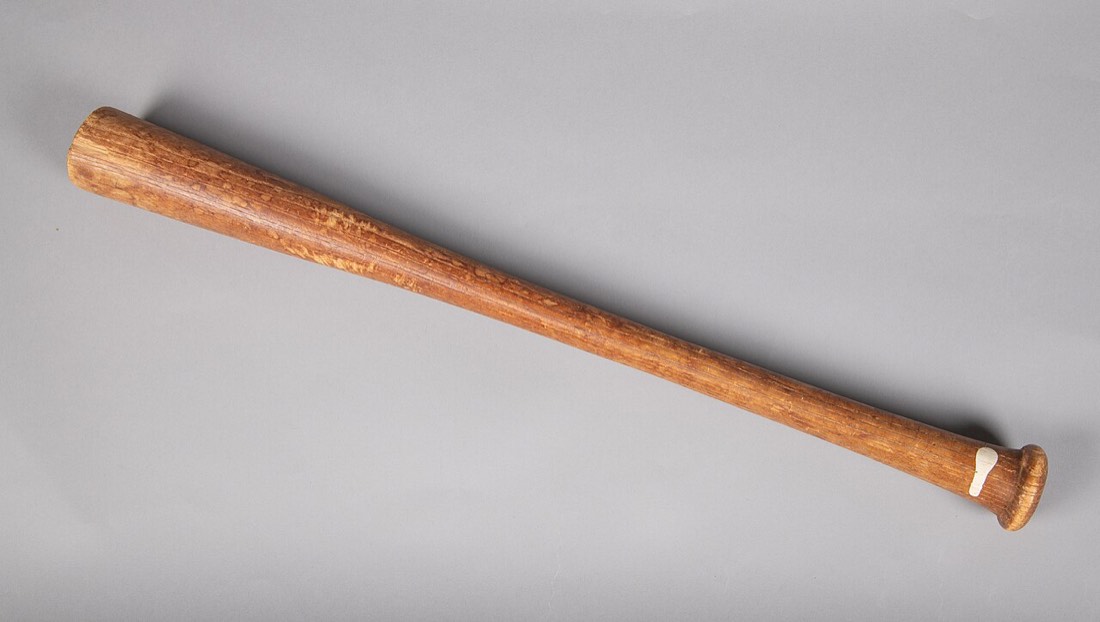
That adjustment is often described as battling, and it has a physical side. Many hitters choke up an inch or two on the handle, which shortens the bat path and improves control over the barrel. Others move a little closer to the plate or widen their stance slightly, lowering the centre of gravity and reducing head movement. None of these changes is dramatic, but together they reward a swing built for contact instead of damage. The goal is simply to put the ball in play.
Notice also what disciplined hitters stop doing. They abandon the big leg kick that adds power but also adds timing risk, replacing it with a quieter toe tap or a smaller stride. The extra timing margin matters because two-strike pitchers rarely offer a fastball down the middle. They want a changeup that dives or a slider that starts in the zone and finishes in the dirt, and a hitter who is slightly late on the fastball can still adjust.
Seeing the Ball Longer
Vision is the quiet engine of a two-strike approach. Hitters talk about letting the ball travel, meaning they wait a fraction longer before deciding to swing. Because the pitch is allowed to get deeper into the hitting zone, the eyes have more time to separate the spin of a breaking ball from the clean rotation of a fastball. Letting the pitch travel also pushes contact toward the middle of the field, where a late swing naturally sends the ball, and away from the weak pull side grounder.
Pitchers understand this, which is why they attack with pitches designed to change eye level. A high fastball followed by a low breaking ball can freeze a hitter who has committed his gaze to one height. Smart batters rehearse this in the cage by tracking pitches of different heights before they ever swing. They train the eyes to stay soft and wide, picking up the release point and the early path of the ball, and not hunting for one location.
Learning when to take is as important as learning when to swing. A pitch that finishes just off the plate is a ball, and a patient hitter will let it go even with two strikes, trusting his judgement of the zone. That trust is built through hundreds of at-bats, which is exactly why summer league baseball is so valuable. Players face unfamiliar arms every night, and every unfamiliar arm tests whether a hitter really knows where his zone ends.
Protecting Against the Out Pitch
Most pitchers have one pitch they trust more than any other, and they save it for two strikes. Hitters who study this habit can narrow the possibilities, anticipating a slider from the left-hander with the sharp break or a splitter from the college closer with the hard downward action. Knowing the likely pitch does not make it easy to hit, but it removes the surprise. A hitter who is ready for the out pitch simply has fewer ways to lose.
Protecting the plate also means thinking about where an unlucky result can still help the team. A ground ball to the right side moves a runner. A fly ball deep enough to the outfield scores one from third. Hitters who understand the situation will tailor the approach, choosing the swing that serves the inning. Strikeouts hurt because they accomplish nothing, while almost any ball in play at least forces the defence to make a decision, and defenders do make mistakes.
Coaches in summer leagues frequently teach this with a simple drill: the batting practice pitcher throws a mix of strikes and balls while the hitter starts every round with two strikes. The only task is to fight off hard pitches and drive the good ones the other way. It is not glamorous work, and it rarely produces towering home runs, but it builds the habits that keep a player in the lineup when the competition tightens in August.
The Mark of a Complete Hitter
What separates great hitters from good ones is not that they never strike out. Every hitter does. It is that their strikeouts come less often with a bad swing and their two-strike at-bats frequently end with a single, a walk or a long fight that tires out the pitcher. Over a ten-week season, those small wins add up to extra baserunners and deeper counts, and deeper counts push opposing starters toward the bullpen earlier than they would like.
Anyone watching a wood-bat game can see the difference if they pay attention. The great hitter steps in with two strikes and looks a little different: quieter hands, calmer eyes, a shorter path. He is not hunting for glory any more. He is solving a problem, and the satisfaction of doing it well, one fouled-off pitch after another, is a very particular kind of baseball pleasure that scouts and teammates both notice.
Comments
Be the first to comment on this story.